
Event season is one of the busiest times of year for many non-profit organizations. From fundraising dinners and raffles to community festivals and charity tournaments, events often generate vital funding and public awareness.
However, busy schedules and volunteer-driven operations can sometimes lead to financial mistakes that create problems long after the event ends.
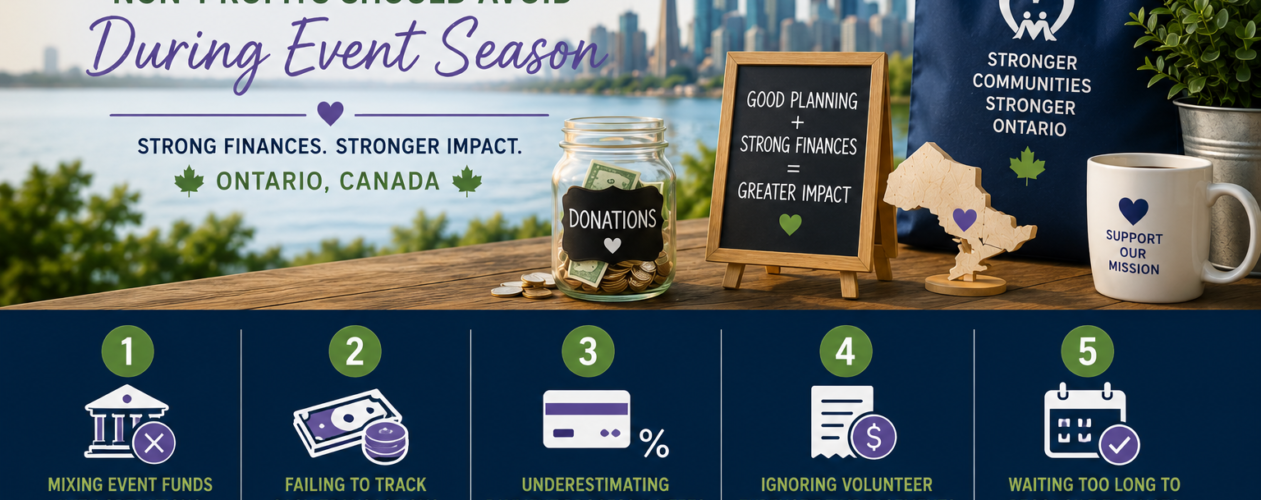
Here are five common financial mistakes non-profit groups should avoid during event season.
1. Mixing Event Funds with General Operations
It is important to track event-related income and expenses separately whenever possible. Combining everything into one account or spreadsheet can make reporting difficult and reduce visibility into how successful an event actually was.
Separate tracking allows organizations to:
- Measure event profitability
- Prepare cleaner financial reports
- Simplify audits and grant reporting
- Identify areas to improve next year
Dedicated categories within bookkeeping software can make this much easier.
2. Failing to Track Cash Transactions Properly
Many fundraising events still involve cash sales, donations, raffles, or concessions. Without proper procedures, cash handling can become disorganized quickly.
Best practices include:
- Assigning multiple volunteers to count cash together
- Using cash logs or reconciliation sheets
- Issuing receipts where appropriate
- Depositing funds promptly after the event
Strong cash controls help protect both the organization and its volunteers.
3. Underestimating Payment Processing Fees
Online ticketing platforms and card processors provide convenience but often charge transaction fees that reduce net fundraising totals.
Before setting ticket prices or fundraising goals, organizations should account for:
- Credit card processing fees
- Online platform fees
- Refund policies
- Currency conversion fees for online donations
Factoring these costs into pricing decisions can help avoid budget shortfalls.
4. Ignoring Volunteer Expense Reimbursements
Volunteers frequently purchase supplies, decorations, or materials out of pocket during event preparation. Without a clear reimbursement process, expenses may go unrecorded or create confusion later.
Organizations should establish:
- Approval procedures for purchases
- Receipt submission deadlines
- Expense reimbursement forms
- Spending limits where appropriate
Keeping records organized helps maintain transparency and accurate bookkeeping.
5. Waiting Too Long to Reconcile Event Finances
After a successful event, many organizations move immediately into the next project and delay financial reconciliation. Unfortunately, this can result in missing receipts, forgotten expenses, or inaccurate reporting.
Shortly after each event:
- Reconcile bank deposits
- Match invoices and receipts
- Record sponsorship revenue
- Review outstanding payments
- Prepare a summary of event performance
Timely reconciliation makes year-end accounting significantly easier and provides valuable insight for future planning.
Final Thoughts
Successful non-profit events rely on more than great attendance and fundraising goals. Financial organization behind the scenes plays a critical role in maintaining transparency, accountability, and long-term sustainability.
By avoiding common financial mistakes during event season, organizations can focus more energy on supporting their mission and serving their communities.